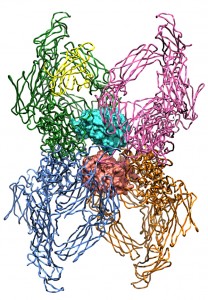
 Alpha-2-macroglobulin (A2M) is the biologic treatment for your arthritic knee that you are carrying around in your own bloodstream! Your body creates a very large protein in your liver which is carried via your bloodstream to your various organs and has several important roles to keep you healthy. The protein is called alpha-2-macroglobulin (A2M) and is among the largest and heaviest proteins that your body makes. It is a naturally occurring plasma glycoprotein whose principal activity is to counteract the protein/enzymes called proteases that breakdown various chemicals and molecules no longer needed in your body in a well-balanced chain of events that keeps you healthy.
One of the most exciting areas of current regenerative medicine research involves alpha-2-macroglobulin (A2M), one of the largest naturally occurring proteins found in human plasma.
A2M acts as a broad-spectrum protease inhibitor, meaning it can bind and neutralise many of the enzymes responsible for the breakdown of articular cartilage in osteoarthritic joints. These cartilage-degrading enzymes, including matrix metalloproteinases (MMPs) and other inflammatory proteases, play an important role in the progression of osteoarthritis.
By helping to reduce the activity of these destructive enzymes, A2M may create a more favourable biological environment within the joint, supporting cartilage preservation and reducing ongoing tissue degeneration. This mechanism is believed to be one of several ways platelet-rich plasma (PRP) therapy may benefit patients with osteoarthritis.
The identification of A2M’s role has generated considerable interest in regenerative medicine and has expanded our understanding of how orthobiologic therapies may influence the joint environment. While laboratory and early clinical research is encouraging, further high-quality clinical studies are needed to determine the extent of these effects and their long-term impact on osteoarthritis progression.
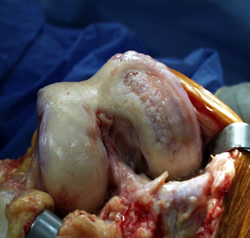
Complete destruction of articular cartilage.
Osteoarthritis is the most common form of arthritis and one of Australia’s leading causes of chronic pain, reduced mobility and disability. It is estimated that approximately 2.5 million Australians are living with osteoarthritis, with around one in three adults expected to develop symptomatic knee osteoarthritis during their lifetime.
The prevalence of osteoarthritis continues to rise due to several factors, including an ageing population, increased life expectancy, higher participation in recreational and sporting activities, and increasing rates of obesity. As a result, OA places a substantial burden not only on individuals but also on Australia’s healthcare system and economy.
For many people, osteoarthritis progressively affects joint function, leading to pain, stiffness, reduced mobility and muscle weakness. These symptoms can interfere with work, exercise and everyday activities, significantly impacting quality of life. While many individuals achieve good symptom control with exercise, weight management and conservative care, others experience progressive joint deterioration that may ultimately require joint replacement surgery.
Despite the high prevalence of osteoarthritis, most current treatments are primarily aimed at managing symptoms rather than reversing the underlying disease process.
Conventional management may include pain-relieving medications such as paracetamol or non-steroidal anti-inflammatory drugs (NSAIDs), corticosteroid injections, hyaluronic acid (viscosupplementation) in selected patients, structured exercise programs, weight management, activity modification and physiotherapy. These treatments can provide meaningful pain relief and improve function for many individuals; however, they generally do not restore damaged articular cartilage or reliably alter the long-term progression of osteoarthritis.
Lifestyle interventions remain the cornerstone of osteoarthritis management. Maintaining a healthy body weight, improving muscle strength, preserving joint mobility and modifying activities when appropriate can significantly reduce symptoms and improve quality of life.
More recently, there has been growing interest in biologic and regenerative therapies, including platelet-rich plasma (PRP). These treatments aim to influence the biological environment within the joint by modulating inflammation and supporting the body’s natural healing processes. While the emerging evidence is encouraging for selected patients, research is ongoing to better define which individuals are most likely to benefit and the extent to which these therapies may influence disease progression.
While considerable advances have been made in managing the symptoms of osteoarthritis, there remains no treatment that has been conclusively shown to stop or reverse the disease process or reliably regenerate lost articular cartilage.
As osteoarthritis progresses, the gradual breakdown of cartilage and changes to the surrounding bone, synovium and supporting tissues can lead to increasing pain, stiffness and loss of joint function. For some individuals, despite appropriate conservative management, joint replacement surgery may eventually become the most effective option for restoring function and relieving pain.
This has driven significant interest in biologic and regenerative therapies that aim to influence the underlying biological processes involved in osteoarthritis rather than simply treating symptoms. One molecule receiving increasing attention is alpha-2-macroglobulin (A2M), a naturally occurring plasma protein with potent protease-inhibiting properties.
Alpha-2-macroglobulin is capable of binding and neutralising many of the enzymes that contribute to cartilage degradation within the osteoarthritic joint. By reducing the activity of these cartilage-degrading proteases, A2M may help create a more favourable environment for joint preservation. Researchers believe this may represent one of the mechanisms through which platelet-rich plasma (PRP) and other orthobiologic therapies exert their effects.
Although laboratory studies and early clinical research are encouraging, further high-quality clinical trials are required to determine the extent to which therapies targeting A2M and related biological pathways can influence the long-term progression of osteoarthritis.
The Biology of Osteoarthritis
To understand how regenerative therapies may work, it is helpful to have a basic understanding of the biological processes involved in osteoarthritis.
Osteoarthritis is no longer viewed simply as a condition caused by “wear and tear.” It is now recognised as a complex biological disease involving the entire joint, including the articular cartilage, subchondral bone, synovium, ligaments and surrounding muscles.
Within the osteoarthritic joint, there is an imbalance between the body’s normal repair mechanisms and the processes responsible for tissue breakdown. This imbalance leads to increased production, or up-regulation, of inflammatory mediators and cartilage-degrading enzymes known as proteases. These include inflammatory cytokines, matrix metalloproteinases (MMPs) and ADAMTS enzymes, all of which contribute to the progressive degradation of cartilage and other joint tissues.
Although the exact factors that initiate and perpetuate this biological cascade are not yet fully understood, it is clear that persistent activation of these destructive pathways plays a central role in the progression of osteoarthritis. Over time, continued breakdown of the cartilage matrix reduces the joint’s ability to absorb load and move smoothly, leading to pain, stiffness, reduced mobility and loss of function.
Understanding these biological mechanisms has shifted the focus of research toward therapies that aim not only to relieve symptoms but also to modify the joint environment by reducing excessive inflammation and limiting the activity of cartilage-degrading enzymes. This is one of the reasons why biologic treatments, including platelet-rich plasma (PRP) and proteins such as alpha-2-macroglobulin (A2M), have become areas of active scientific investigation.
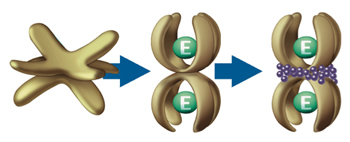
Alpha-2-Macroglobulin (A2M): A Naturally Occurring Protective Protein
Research over the past decade has identified alpha-2-macroglobulin (A2M) as one of the body’s most important naturally occurring broad-spectrum protease inhibitors. A2M has attracted considerable interest because of its ability to bind and neutralise many of the enzymes involved in cartilage degradation, including matrix metalloproteinases (MMPs), ADAMTS enzymes and other inflammatory proteases associated with osteoarthritis.
Experimental studies have demonstrated that A2M can reduce the activity of these cartilage-degrading enzymes and may also influence inflammatory signalling pathways involved in joint degeneration. Some laboratory research has suggested that A2M may regulate the expression of genes associated with protease production, leading researchers to describe it as a key regulator of cartilage protection under experimental conditions.
These findings have led to growing interest in A2M as a potential component of biologic therapies for osteoarthritis. Animal studies and early clinical investigations suggest that increasing the concentration of A2M within an osteoarthritic joint may help reduce cartilage degradation, moderate inflammation and create a more favourable biological environment for joint preservation. However, further high-quality human clinical trials are required to determine the extent of these effects and whether they translate into meaningful long-term modification of osteoarthritis progression.
A2M is produced predominantly by the liver and circulates throughout the bloodstream in relatively high concentrations. Although it is abundant in the circulation, research suggests that the amount reaching the synovial fluid of an osteoarthritic joint may not always be sufficient to counteract the increased levels of cartilage-degrading enzymes present within the joint environment.
This understanding has prompted interest in orthobiologic treatments that utilise a patient’s own blood, such as platelet-rich plasma (PRP). In addition to delivering platelets and growth factors, PRP also contains plasma proteins—including A2M—that may contribute to its biological activity. Researchers continue to investigate whether concentrating and delivering these naturally occurring protective proteins directly into the joint can help reduce inflammation, support cartilage health and improve symptoms in appropriately selected patients.
While the scientific rationale is compelling and the emerging evidence is encouraging, A2M and PRP should currently be regarded as promising biologic therapies rather than proven disease-modifying treatments. Ongoing research will continue to define their role in the management of osteoarthritis.
- Browning S, et al.; Chondroprotective effect of alpha-2-macroglobulin (A2M) on bovine cartilage explants. Data on file with Cytonics, Corp.
- Tortorella MD, et al.; alpha-2-macroglobulin is a novel substrate for ADAMTS-4 and ADAMTS-5 and represents an endogenous inhibitor of these enzymes. J Biol Chem 2004; 279:17554-61.
- Wang S, et al.; Identification of alpha-2-macroglobulin as a master inhibitor of cartilage-degrading factors that attenuates the progression of posttraumatic osteoarthritis. Arthritis Rheum 2014; 66:1843-53.
- Cuellar JM, et al.; Is there a chondroprotective effect of autologous protease inhibitor concentrate on an osteoarthritis rabbit model? A pilot study. Data on file at Cytonics, Corp.
- Woolley DE, et al.; Small molecular weight ?1 serum protein which specifically inhibits human collagenases. Nature 1976; 261:325-7.
- Malavolta EA, et al.; Platelet-rich plasma in rotator cuff repaira prospective randomized study. Am J Sports Med 2014, Aug. Publ online.
- Clinical Practice Guidelines on the Treatment of Osteoarthritis (OA) of the Knee (non-arthroplasty)2nd Edition. Adopted by the American Academy of Orthopaedic Surgeons Board of Directors May 18, 2013http://bit.ly/1wtTOAZ
- ClinicalTrials.gov. Serum and synovium protease inhibitor levels in primary and secondary osteoarthritic joints. http://clinicaltrials.gov/show/NCT01613833. Accessed Sept. 2014.
- Page MR; The age of targeted osteoarthritis therapy begins. Pharmacy Times. Published online, Wed., Sept. 17, 2014. http://www.pharmacytimes.com/news/Alpha-2-Macroglobulin-The-Age-of-Targeted-Therapy-for-Osteoarthritis-Begins