This page serves as the central educational hub of our regenerative medicine section. The individual PRP, BMA, BMAC and PBMT pages focus on the evidence, indications and frequently asked questions specific to each therapy, while linking back to this overview for readers who want to understand the broader biological concepts.
Understanding How Biological Therapies Support the Body’s Natural Healing Response
Orthobiologics are biological substances used in the management of musculoskeletal conditions with the aim of supporting the body’s normal tissue repair processes. Rather than replacing damaged tissues, orthobiologic treatments are designed to influence the local biological environment involved in healing.
Depending on the diagnosis and treatment goals, orthobiologic therapies may include:
- Platelet-Rich Plasma (PRP)
- Bone Marrow Aspirate (BMA)
- Bone Marrow Aspirate Concentrate (BMAC)
Treatment recommendations are always based on a comprehensive clinical assessment, current scientific evidence and each patient’s individual needs.
The Body’s Natural Response to Injury
When a tendon, ligament, muscle or joint is injured, the body progresses through a series of overlapping biological stages. These stages are coordinated through complex cellular communication involving inflammatory cells, growth factors and signalling molecules.
Orthobiologic treatments are designed to support one or more of these normal biological processes rather than replacing them.
Graphic 1 – Healing Cascade
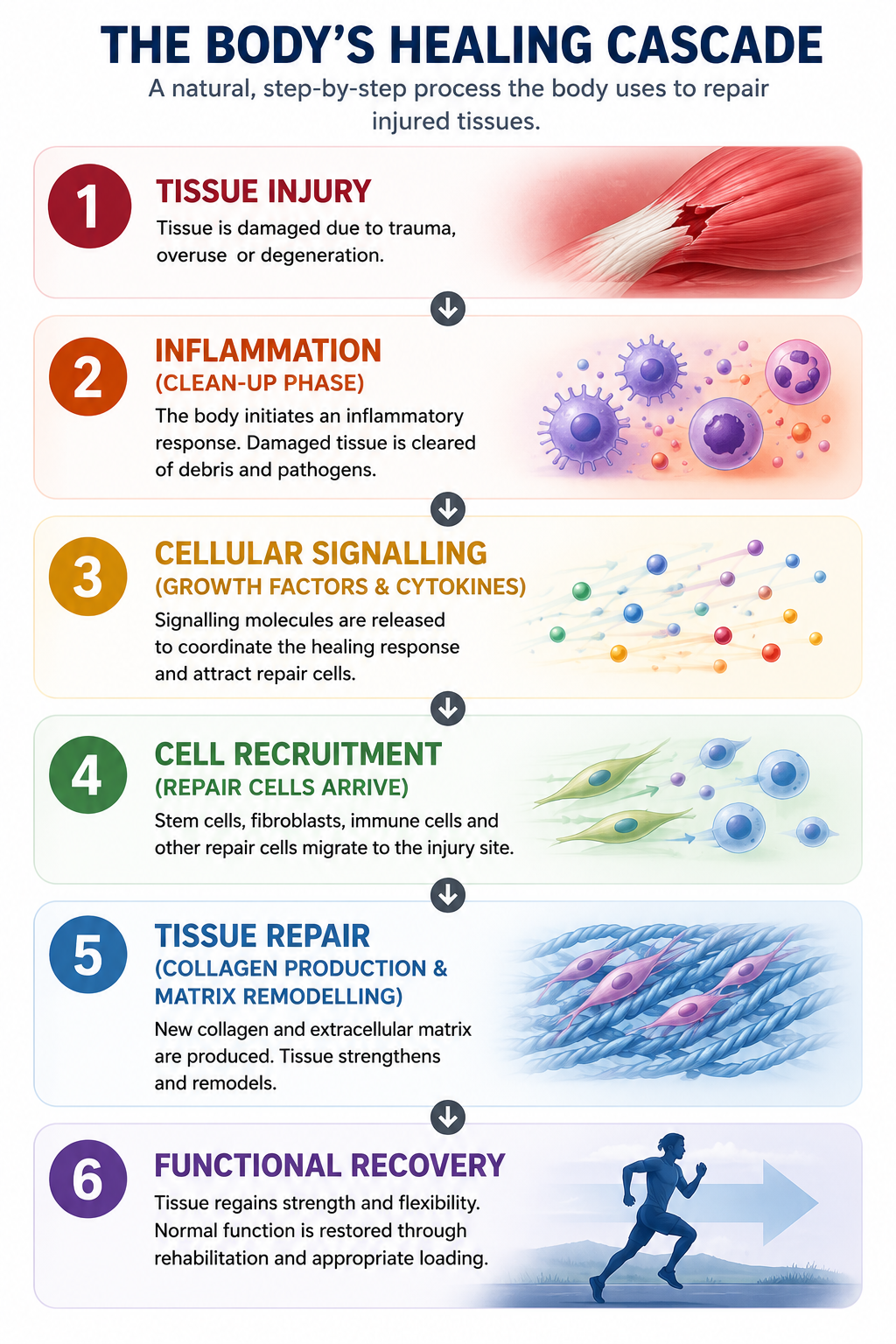
Tissue Injury → Inflammation → Cellular Signalling → Cell Recruitment → Tissue Repair → Functional Recovery
Different Orthobiologic Treatments
Not all orthobiologic preparations are the same. Each contains a different combination of cells and biological components and may be considered for different clinical situations.
Graphic 2 – Orthobiologics Comparison
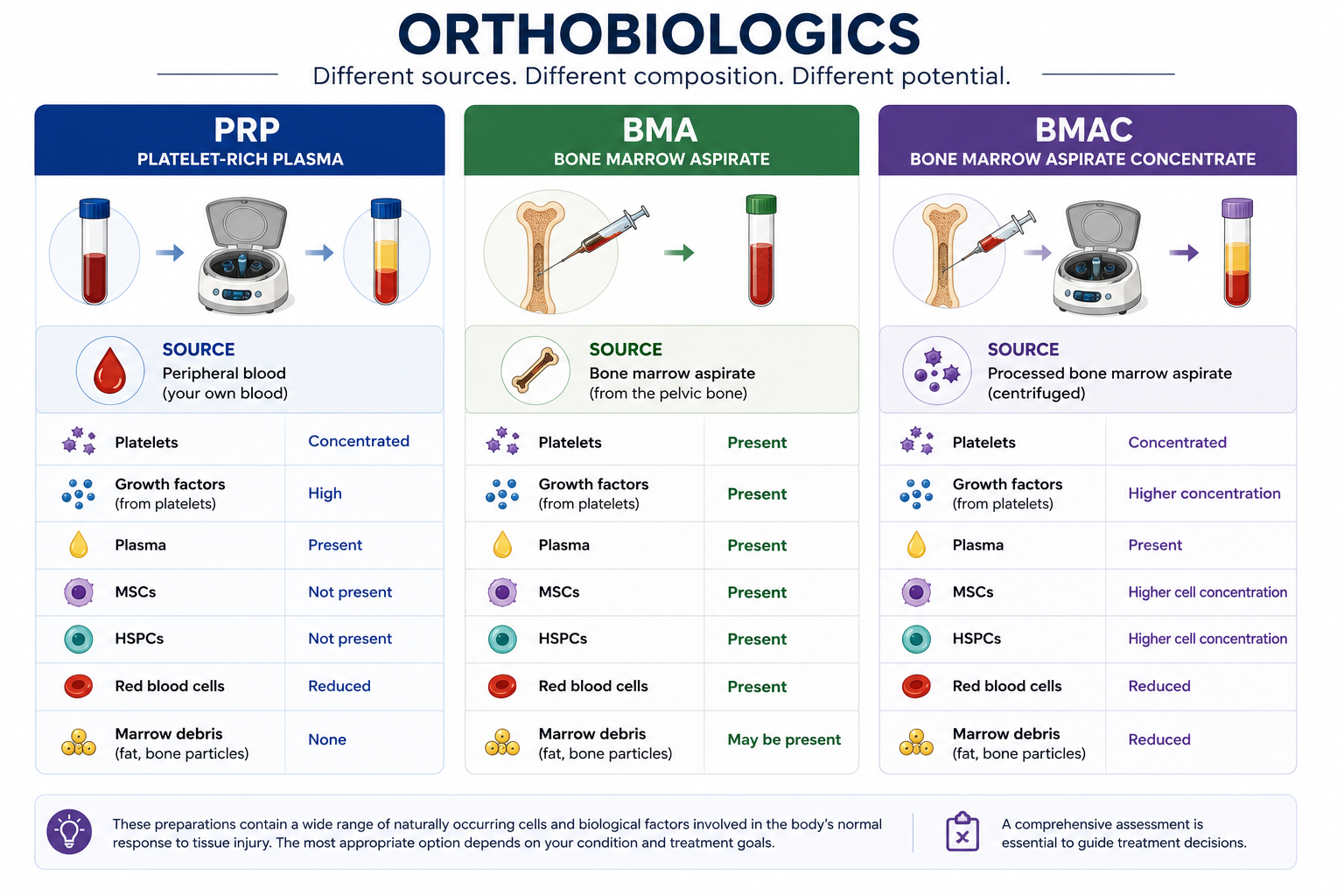
- Blue – Platelet-Rich Plasma (PRP)
Peripheral blood processed to concentrate platelets and platelet-derived growth factors. - Green – Bone Marrow Aspirate (BMA)
Bone marrow containing mesenchymal stromal cells (MSCs), haematopoietic stem and progenitor cells (HSPCs), platelets, white blood cells and plasma proteins. - Dark Green – Bone Marrow Aspirate Concentrate (BMAC)
Processed bone marrow aspirate with a higher concentration of selected cellular components and reduced red blood cells and marrow debris.
Selection depends on the tissue being treated, current scientific evidence and the patient’s individual clinical circumstances.
Platelet-Rich Plasma (PRP)
Platelet-Rich Plasma is prepared by collecting a small sample of the patient’s blood and concentrating the platelets using centrifugation.
Platelets contain naturally occurring growth factors and signalling molecules involved in the body’s normal response to tissue injury.
Graphic 3 – PRP Preparation
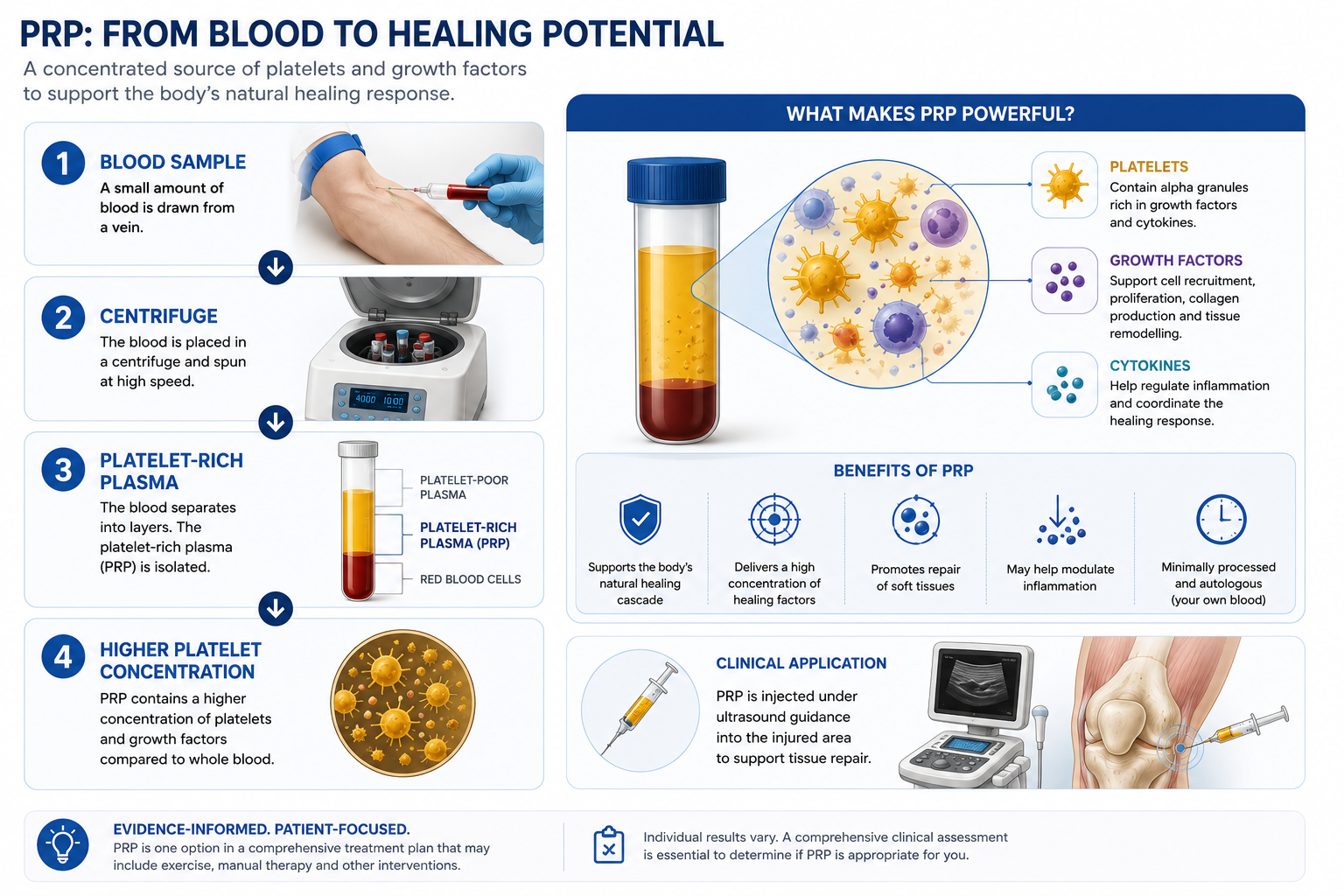
Blood Collection → Centrifugation → Platelet-Rich Plasma → Ultrasound-Guided Injection
PRP may be considered for selected tendon, ligament, muscle and joint conditions where clinically appropriate.
Bone Marrow Aspirate (BMA)
Bone marrow aspirate is obtained from the patient’s own bone marrow.
Unlike peripheral blood, bone marrow contains a diverse range of biologically active cells involved in the body’s normal response to tissue injury, including:
- Mesenchymal stromal cells (MSCs)
- Haematopoietic stem and progenitor cells (HSPCs)
- Platelets
- White blood cells
- Plasma proteins
Graphic 4 – Components of Bone Marrow Aspirate
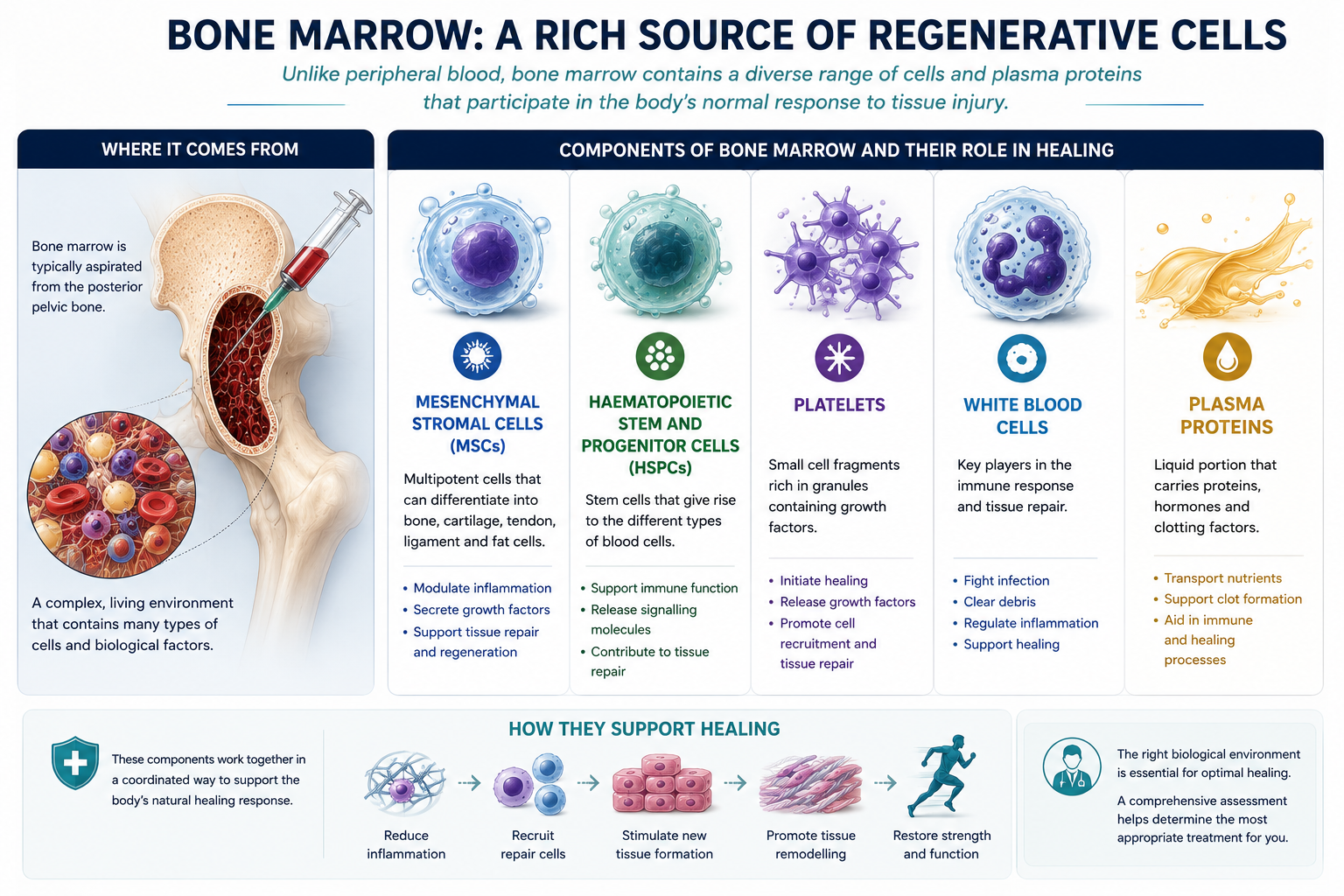
Illustrated cross-section of bone marrow highlighting the major cellular components and their role in supporting tissue repair.
Bone Marrow Aspirate Concentrate (BMAC)
Bone Marrow Aspirate Concentrate (BMAC) is produced by processing bone marrow aspirate using centrifugation.
The aim is to increase the concentration of selected cellular components while reducing unwanted material such as excess red blood cells, marrow fat and bone debris.
Graphic 5 – BMA to BMAC
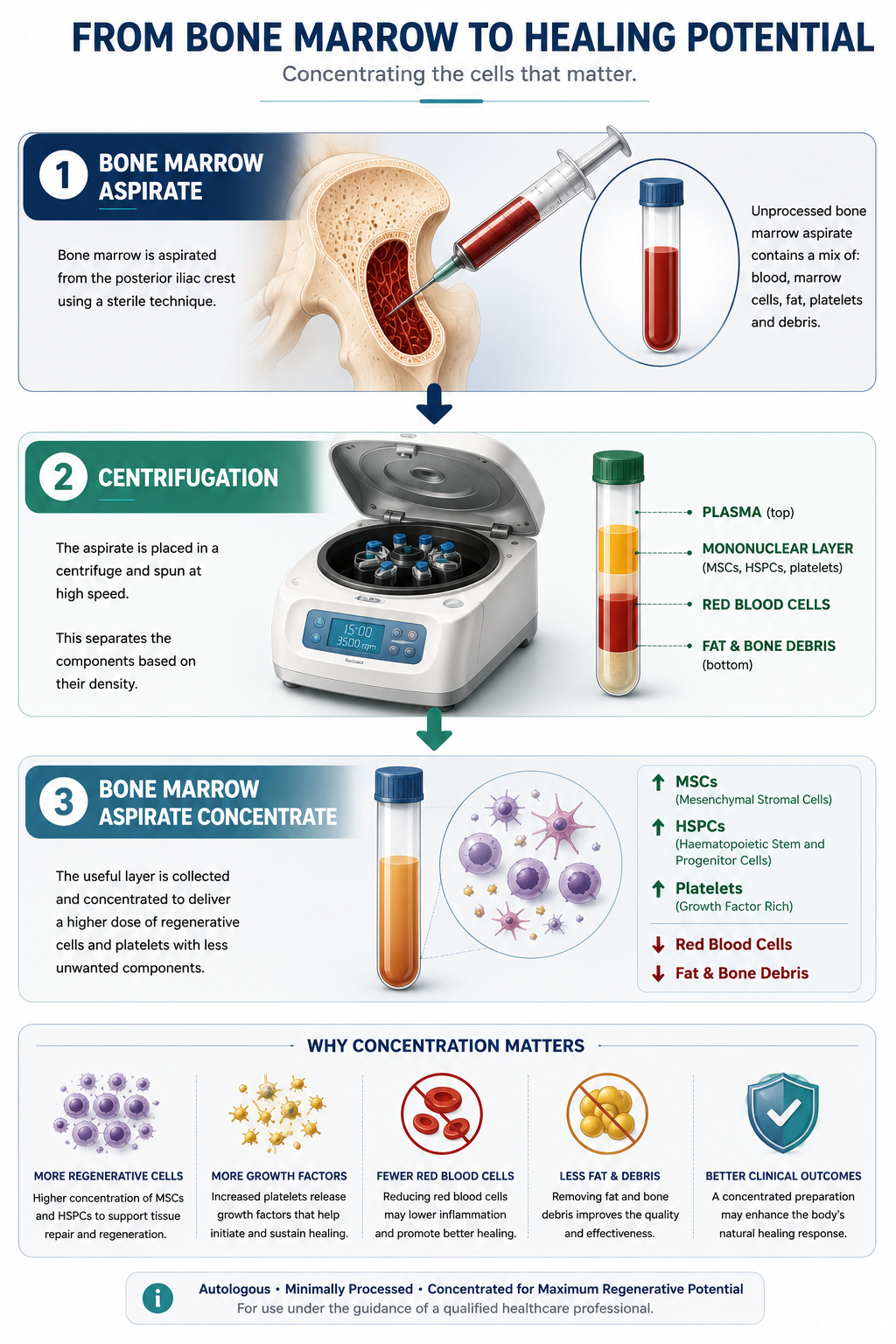 Bone Marrow Aspirate -> Centrifugation -> Bone Marrow Aspirate Concentrate
Biological Changes
↑ Mesenchymal stromal cells (MSCs)
↑ Haematopoietic stem and progenitor cells (HSPCs)
↑ Platelets
↓ Red blood cells
↓ Marrow fat and bone debris
Laboratory studies consistently demonstrate these changes in cellular composition. Whether higher cellular concentrations produce superior clinical outcomes for every musculoskeletal condition remains an area of ongoing research.
Where Does Photobiomodulation Therapy (PBMT) Fit?
Photobiomodulation Therapy differs from orthobiologic procedures because it does not involve injections or the collection of biological tissues.
Instead, carefully controlled red and near-infrared light is applied to influence biological processes involved in the body’s normal response to tissue injury.
Graphic 6 – How PBMT Works
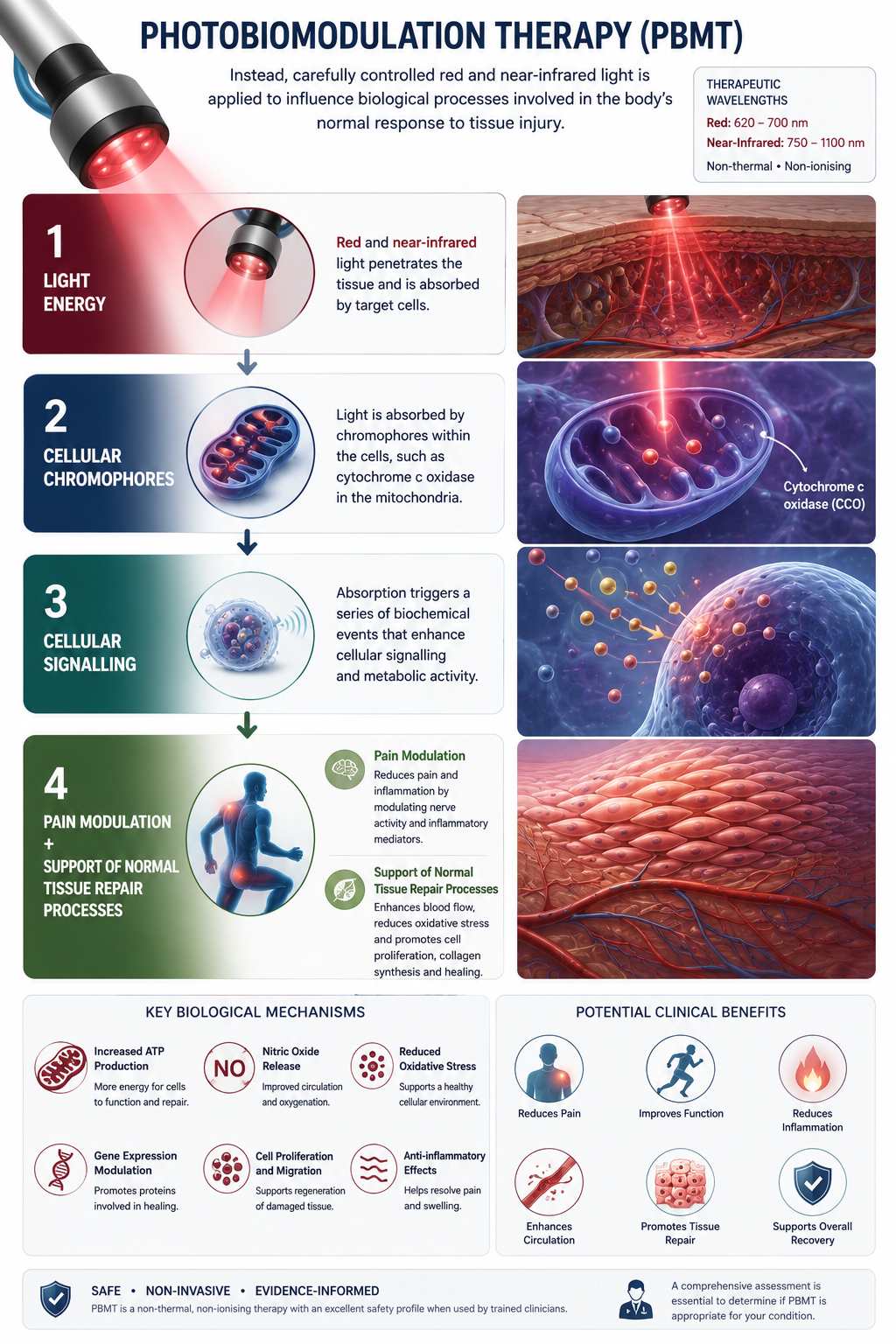
Light Energy -> Cellular Chromophores -> Mitochondrial Activation -> Cellular Signalling -> Pain Modulation ->
Support of Normal Tissue Repair Processes
PBMT may be used on its own or alongside rehabilitation and orthobiologic procedures where clinically appropriate.
Choosing the Most Appropriate Treatment
No single treatment is appropriate for every patient.
Treatment recommendations are based on:
- Your diagnosis
- The tissue involved
- The severity and duration of symptoms
- Your medical history
- Previous treatments
- Current scientific evidence
- Your individual treatment goals
Graphic 7 – Clinical Decision Pathway
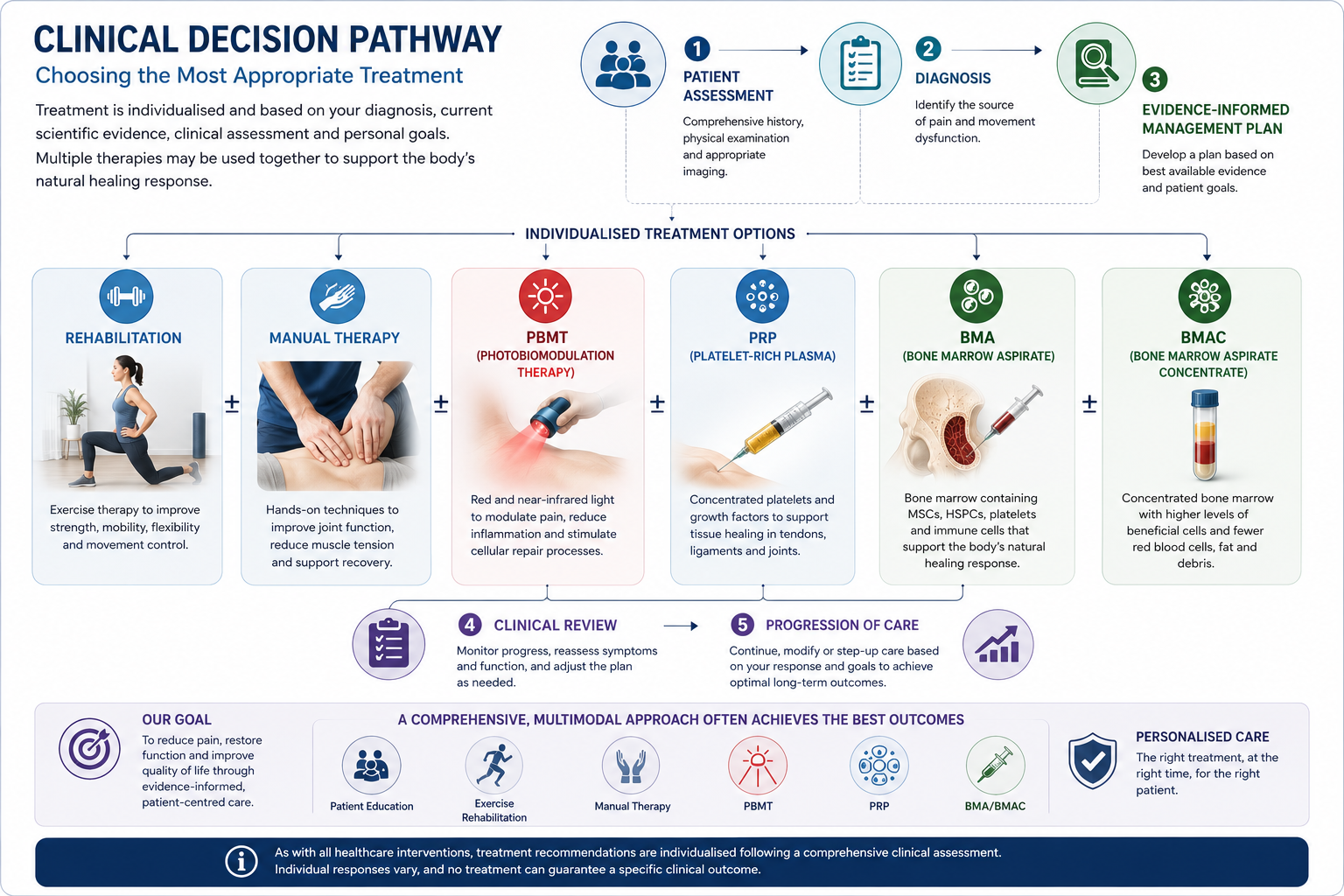 Patient Assessment -> Diagnosis -> Evidence-Informed Management -> Rehabilitation +/- Manual Therapy +/- PBMT +/- BMA/BMAC -> Clinical Review -> Progression of Care
For many patients, the most effective management combines rehabilitation, patient education, manual therapy and, where clinically appropriate, orthobiologic procedures or Photobiomodulation Therapy.