 Regenerative Medicine
Supporting Musculoskeletal Health Through Evidence-Informed Orthobiologic Medicine
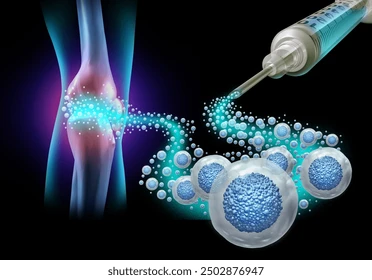
Regenerative medicine is an evolving area of healthcare that investigates the use of biological therapies to support the body’s natural tissue repair processes. Within musculoskeletal medicine, these treatments are commonly referred to as orthobiologic procedures because they utilise naturally occurring biological components obtained from the patient’s own tissues to help optimise the local biological environment involved in healing.
Orthobiologic procedures are being investigated as non-surgical treatment options for selected tendon, ligament, muscle, cartilage, bone and joint disorders, particularly where symptoms have persisted despite appropriate conservative management. Rather than replacing damaged tissue, these treatments aim to support the body’s normal biological repair mechanisms and may improve pain and function in appropriately selected patients.
Research in regenerative medicine continues to expand rapidly. While some orthobiologic procedures, such as Platelet-Rich Plasma (PRP), have demonstrated benefit for selected musculoskeletal conditions, the strength of evidence varies between treatments and clinical indications. Treatment recommendations are therefore based on current scientific evidence, careful patient selection and shared clinical decision-making.
At Ashmore Osteopathic Group, orthobiologic procedures are considered one component of a comprehensive musculoskeletal management plan that may also include patient education, exercise-based rehabilitation, activity modification, manual therapy and ongoing clinical review.
Understanding Orthobiologic Medicine
Orthobiologics are biological substances used in the management of musculoskeletal disorders with the aim of supporting the local biological environment involved in tissue repair.
Depending on the procedure, these preparations may contain varying combinations of:
- Platelets
- Growth factors
- Cytokines
- Chemokines
- Mesenchymal stromal cells (MSCs)
- Haematopoietic stem and progenitor cells
- Extracellular matrix proteins
- Other naturally occurring signalling molecules
Many orthobiologic procedures utilise the patient’s own tissues (autologous), reducing the risk of immune rejection and disease transmission.
Current scientific understanding suggests that these biological components influence healing primarily through complex cellular signalling and regulation of the local tissue environment rather than directly replacing damaged tissue.
Although laboratory studies have demonstrated numerous biological effects, translating these findings into predictable clinical outcomes remains an active area of research.
Our Approach
Successful treatment begins with an accurate diagnosis.
Every patient undergoes a comprehensive assessment that considers:
- Clinical history
- Physical examination
- Functional assessment
- Previous treatments
- Relevant imaging
- Diagnostic musculoskeletal ultrasound where appropriate
- Medical history
- Lifestyle factors
- Functional goals
Following assessment, treatment recommendations are individualised according to:
- Current scientific evidence
- Severity of the condition
- Tissue pathology
- General health
- Patient preferences
- Expected rehabilitation
Orthobiologic procedures are recommended only when they are considered an appropriate component of the overall management plan.
Choosing the Appropriate Orthobiologic
No single biological therapy is appropriate for every musculoskeletal disorder.
Treatment selection depends on numerous factors including:
- Diagnosis
- Acute versus chronic injury
- Tendon, ligament, cartilage or bone involvement
- Severity of degeneration
- Previous response to treatment
- Imaging findings
- Activity level
- Medical suitability
- Rehabilitation requirements
- Current evidence
Our objective is not simply to perform an injection, but to select the most appropriate management strategy for your individual condition.
Platelet-Rich Plasma (PRP)
Platelet-Rich Plasma (PRP) is currently the most extensively researched orthobiologic procedure in musculoskeletal medicine.
PRP is produced by concentrating platelets obtained from a patient’s own blood before reinjecting the platelet-rich fraction into the affected tissue, usually under ultrasound guidance.
Platelets contain numerous biologically active proteins involved in normal tissue repair including:
- Growth factors
- Cytokines
- Chemokines
- Adhesion proteins
These biological mediators are thought to influence:
- Cellular signalling
- Collagen remodelling
- Angiogenesis
- Tissue repair pathways
Current evidence supports the use of PRP for selected chronic tendinopathies and some patients with mild to moderate osteoarthritis, although outcomes vary between individuals.
Bone Marrow Aspirate Concentrate (BMAC)
Bone Marrow Aspirate Concentrate (BMAC) is prepared from a patient’s own bone marrow, most commonly harvested from the posterior iliac crest.
BMAC contains a complex mixture of biological components including:
- Mesenchymal stromal cells (MSCs)
- Haematopoietic stem and progenitor cells
- Platelets
- Growth factors
- Cytokines
- Other signalling molecules
Current evidence suggests that any potential clinical effects are more likely related to the biological signalling functions of these components rather than the direct formation of new cartilage, tendon or bone.
BMAC continues to be investigated for selected musculoskeletal conditions including:
- Osteoarthritis
- Focal cartilage lesions
- Selected tendon disorders
- Bone healing disorders
While early clinical studies are encouraging, further high-quality research is required to define patient selection, treatment protocols and long-term outcomes.
Emerging Orthobiologic Procedures
Research continues into additional biological treatments including:
- Alpha-2-Macroglobulin (A2M)
- Platelet lysate
- Adipose-derived tissue preparations
- Extracellular vesicles
- Cell-free biological products
Many of these remain under active clinical investigation, and their role in routine musculoskeletal practice has not yet been fully established.
Conditions That May Be Suitable
Following a comprehensive clinical assessment, orthobiologic procedures may be considered for selected patients with:
Joint Disorders
- Osteoarthritis
- Selected cartilage lesions
Tendon Disorders
- Tennis elbow
- Golfer’s elbow
- Achilles tendinopathy
- Rotator cuff tendinopathy
- Gluteal tendinopathy
- Patellar tendinopathy
Ligament Injuries
Selected chronic ligament injuries.
Muscle Injuries
Selected chronic muscle injuries.
Other Musculoskeletal Disorders
- Plantar fasciitis
- Selected sacroiliac joint disorders
- Some chronic spinal pain syndromes
Suitability depends on the underlying diagnosis, current evidence and individual clinical assessment.
What Does the Evidence Show?
Scientific evidence supporting orthobiologic medicine continues to evolve.
The quality of evidence varies according to:
- The specific orthobiologic procedure
- The condition being treated
- Patient selection
- Treatment protocols
- Rehabilitation strategies
Current evidence is strongest for selected PRP applications, particularly chronic tendinopathies and mild to moderate osteoarthritis.
For other orthobiologic procedures, including BMAC and emerging biological therapies, encouraging early clinical studies have been published, although additional high-quality clinical trials remain necessary.
Your Consultation
Your consultation includes:
- Comprehensive history
- Clinical examination
- Review of previous treatments
- Diagnostic musculoskeletal ultrasound where appropriate
- Review of imaging
- Discussion of diagnosis
- Review of treatment options
- Discussion of expected benefits
- Discussion of known limitations
- Potential risks
- Alternative management options
- Rehabilitation planning
- Shared decision-making
Only after this assessment will it be determined whether an orthobiologic procedure is appropriate for your condition.
Our Philosophy
Our philosophy is simple:
Accurate diagnosis first. Individualised treatment second. Evidence-informed care always.
Orthobiologic procedures are considered one component of comprehensive musculoskeletal management rather than a stand-alone solution. Where appropriate, they are integrated with rehabilitation, patient education, activity modification and ongoing clinical review to help improve pain, restore function and support long-term musculoskeletal health.
As with all healthcare interventions, not every patient is an appropriate candidate, treatment responses vary between individuals, and no procedure can guarantee a specific clinical outcome.