Knee Osteoarthritis
Understanding Knee Osteoarthritis and Evidence-Informed Management
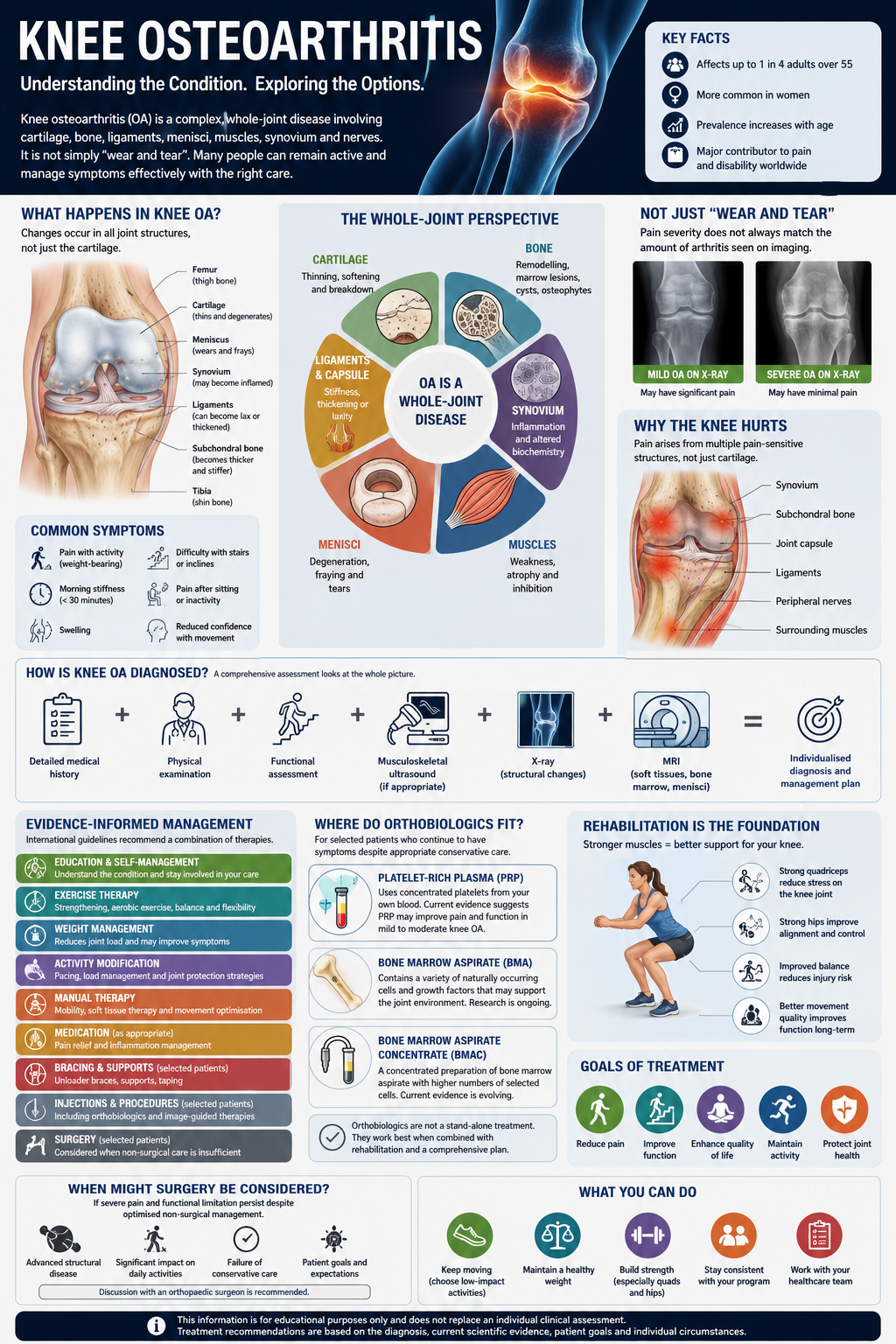
Knee osteoarthritis is one of the most common musculoskeletal conditions affecting adults worldwide. It is a progressive condition involving the entire joint, including cartilage, bone, synovium (joint lining), ligaments, menisci and surrounding muscles.
Although often described as “wear and tear,” current research recognises osteoarthritis as a complex biological process involving mechanical loading, inflammation, tissue remodelling and changes within the local joint environment.
Many people continue to remain active with knee osteoarthritis, and management is aimed at improving pain, function and quality of life while supporting long-term joint health.
What Happens in Knee Osteoarthritis?
A healthy knee relies on the coordinated function of several structures.
These include:
- Articular cartilage
- Menisci
- Subchondral bone
- Joint capsule
- Synovium
- Ligaments
- Muscles and tendons surrounding the knee
In osteoarthritis, changes occur across the whole joint rather than affecting cartilage alone.
These changes may include:
- Gradual cartilage degeneration
- Thickening and remodelling of subchondral bone
- Inflammation of the synovial lining
- Meniscal degeneration
- Reduced muscle strength
- Changes in joint mechanics
Symptoms develop differently from one individual to another and do not always correlate with imaging findings.
Common Symptoms
People with knee osteoarthritis may experience:
- Pain during weight-bearing activities
- Morning stiffness lasting less than 30 minutes
- Swelling
- Reduced walking tolerance
- Difficulty climbing stairs
- Pain after prolonged sitting
- Reduced confidence with movement
- Progressive loss of function
Symptoms often fluctuate, with periods of improvement and exacerbation.
Why Does the Knee Become Painful?
Articular cartilage itself contains very few nerve endings.
Pain usually arises from other structures within the joint, including:
- Synovium
- Subchondral bone
- Joint capsule
- Ligaments
- Surrounding muscles
- Peripheral nerves
Changes within these tissues contribute to inflammation, altered biomechanics and increased sensitivity of the nervous system.
This helps explain why pain severity is not always proportional to the amount of cartilage loss seen on X-rays or MRI.
How Is Knee Osteoarthritis Diagnosed?
Diagnosis begins with a comprehensive clinical assessment.
This may include:
- Medical history
- Physical examination
- Functional assessment
- Assessment of strength and movement patterns
- Review of previous imaging
- Diagnostic musculoskeletal ultrasound where appropriate
X-rays remain useful for demonstrating structural osteoarthritis, while MRI may provide additional information about cartilage, menisci, ligaments and bone marrow lesions in selected patients.
Management decisions are based on the overall clinical picture rather than imaging alone.
Evidence-Informed Management
Current international guidelines recommend a combination of treatments rather than relying on a single intervention.
Management may include:
- Patient education
- Weight management where appropriate
- Progressive strengthening exercises
- Aerobic exercise
- Activity modification
- Manual therapy where clinically appropriate
- Walking aids or bracing in selected cases
- Medication where appropriate
- Image-guided procedures for carefully selected patients
Treatment is individualised according to symptoms, function, goals and overall health.
Where Do Orthobiologics Fit?
Orthobiologic procedures may be considered for selected patients whose symptoms persist despite appropriate conservative management.
Depending on the individual circumstances, these may include:
- Platelet-Rich Plasma (PRP)
- Bone Marrow Aspirate (BMA)
- Bone Marrow Aspirate Concentrate (BMAC)
These procedures are intended to support the biological environment within the joint and should be considered as one component of a broader management plan.
Current evidence is strongest for PRP in selected patients with mild to moderate knee osteoarthritis, while research into BMA and BMAC continues to evolve.
The Importance of Rehabilitation
Regardless of whether injections are used, rehabilitation remains central to successful management.
A rehabilitation program may include:
- Quadriceps strengthening
- Hip strengthening
- Balance training
- Walking programs
- Flexibility exercises
- Progressive functional loading
Improving muscle strength and movement quality helps reduce stress on the joint and supports long-term function.
When Might Surgery Be Considered?
Many people manage knee osteoarthritis successfully without surgery.
For individuals with advanced structural disease, severe pain and substantial loss of function despite appropriate non-surgical management, referral to an orthopaedic surgeon may be appropriate to discuss surgical options.
The decision is individual and based on symptoms, functional limitations and patient goals rather than imaging findings alone.
Frequently Asked Questions
Does osteoarthritis mean my knee is wearing out?
Not necessarily.
Osteoarthritis is now recognised as a disease affecting the whole joint rather than simply the gradual wearing away of cartilage.
Can exercise make arthritis worse?
Appropriately prescribed exercise is considered one of the most effective treatments for knee osteoarthritis and is recommended by international clinical guidelines.
Are injections suitable for everyone?
No.
Image-guided injections, including orthobiologic procedures, are considered only after a comprehensive assessment and discussion of current evidence, potential benefits and alternative treatment options.
Is surgery always inevitable?
No.
Many people successfully manage knee osteoarthritis for years through education, rehabilitation, lifestyle modification and, where appropriate, selected procedural interventions.
Related Topics
- Understanding Osteoarthritis
- Orthobiologics
- Platelet-Rich Plasma (PRP)
- Bone Marrow Aspirate (BMA)
- Bone Marrow Aspirate Concentrate (BMAC)
- Photobiomodulation Therapy
- The Biology of Healing
This information is provided for educational purposes only and should not replace an individual clinical assessment. Management recommendations are based on the diagnosis, current scientific evidence, patient goals and individual clinical circumstances.